C.O.M.P.A.S.S.
Creating Opportunities and Making Personal Advancements to Self Sufficiency
![Aging Out Facts: 1 in 3 [young adults aging out of foster care] face food insecurities. 50% end up incarcerated or face immediate homelessness. 47% face unemployment. 1 in 4 don't graduate from high school.](https://cdn.firespring.com/images/6f0cbd86-e9cf-46c9-90b0-bef8e15ce208.png)
COMPASS makes up the various programs available at David & Margaret dedicated to increasing resources and opportunities for youth facing diverse obstacles as they transition into adulthood through a comprehensive and holistic approach to wellness.
These programs include:
- Permanent Supportive Housing Program
- Transitional Housing Program
- COMPASS Training Program
- COMPASS Point Drop-in Center
Each program is hand-tailored to meet the individual needs of each youth, focusing not only on their basic needs but forming the skills they need to become independent adults.
For youth in foster care, the abrupt transition into adulthood can be detrimental. The second these young adults “age out” they are expected to navigate through society; successfully and independently. Statistically speaking, and from the data we’ve collected in our own experience, this requirement proves to be an impossible task for most former foster youth.
This is through no fault of their own. These young people have not been equipped with the proper tools, knowledge, and resources to successfully transition into adulthood. Yes, these youth need to have their basic needs met through housing, food, and clothing; they also need life-skills training, career and employment support, and linkages to resources to truly be ready for life on their own.
For Additional Information, please contact
Marissa Scholefield, COMPASS Director
COMPASS@davidandmargaret.org
909-596-5921 x3625
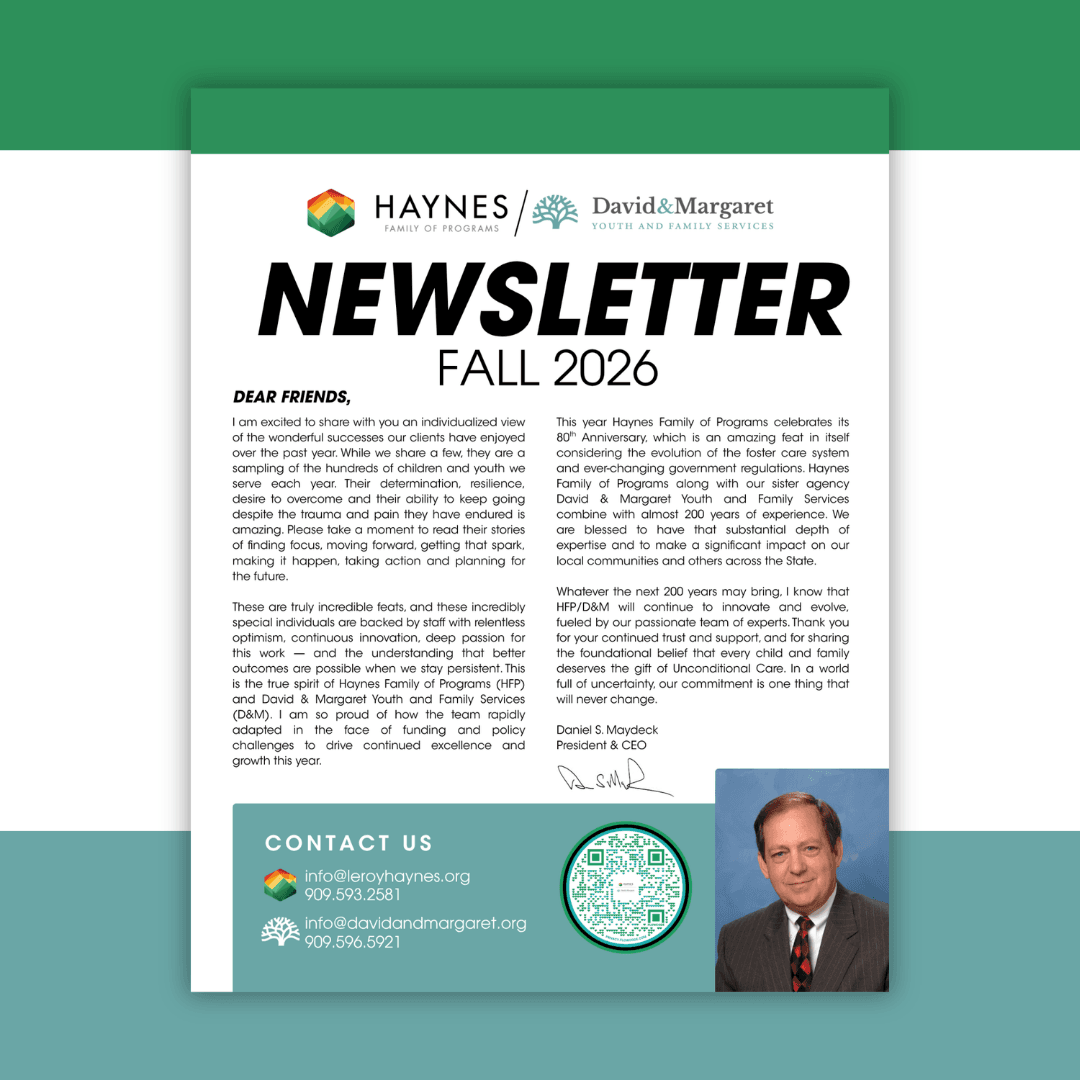
Our Fall 2026 Newsletter is here! Read real stories of growth and resilience from across our COMPASS, Renaissance/Joan Macy, and Bliss Academy programs. Download the full newsletter to see what's possible when a child or young adult has the right support behind them.
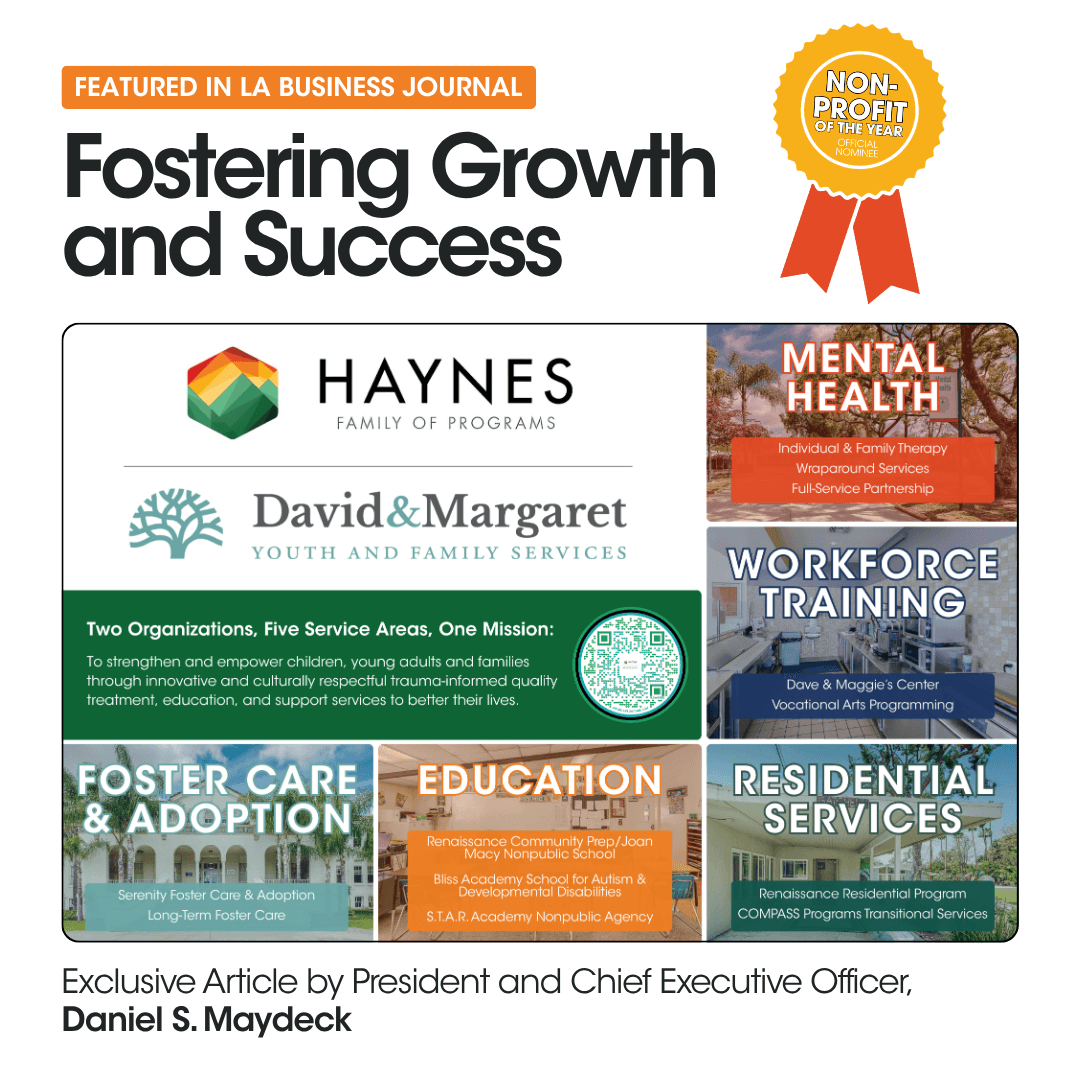
Following our recent Nonprofit of the Year nomination, Haynes Family of Programs and David & Margaret Youth and Family Services were featured in the Los Angeles Business Journal with an exclusive article authored by our President and CEO, Dan Maydeck.
Dan's leadership has helped guide both organizations through decades of regulatory change, funding pressures, and shifting child welfare policy, all while expanding services and deepening our impact. Under his vision, our combined organizations now serve more than 5,000 youth and families annually, with over 110,000 lives meaningfully transformed since our founding.
Featured in the June 22, 2026 edition of the Los Angeles Business Journal.
Explore our Impact Report to see how your support helps change lives every day. Together, we’re creating brighter futures for children, youth, and families in our community.
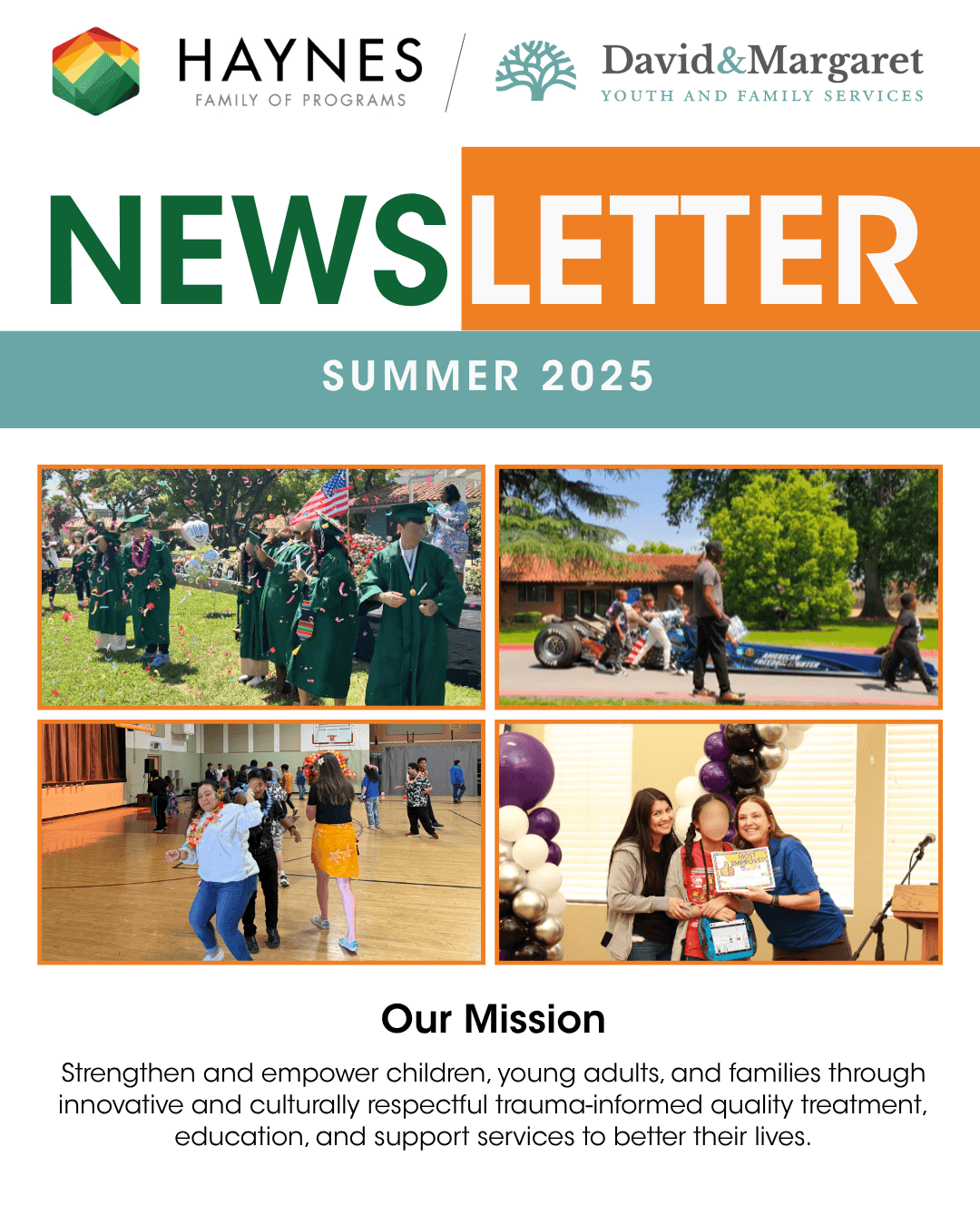
Celebrate our 2025 successes at David & Margaret and Haynes in our Summer Newsletter!